

According to the researchers, the average score on the pre-test was around 36 percent in all three conditions, with no significant differences between conditions. And the average score on the post-test was about 58 percent across the board, with no significant differences between the modes of learning. The students learned equally well with all three modes.
After they were finished with their activities, participants were shown the other two forms of learning. More than three-quarters of the students (78 percent) said that they would prefer the VR activity over the other choices. Their reasoning: In general, by allowing users to easily change the environment on their own, VR provided a „full picture,“ which helped them build their „mental model.“ Among those who didn’t prefer VR, the overall sense was that they were uncomfortable or distracted „with the overwhelming sensory input,“ including the use of the controls.
„The similarity in learning outcome is particularly interesting, given that the VR participants had to learn how to use new technology at the same time they were learning the moon phases,“ said lead author Jack Madden, a doctoral candidate in the field of astronomy, in an article about the project. „What would the outcome have been if they’d already been familiar with using VR to learn?“
The paper, „Virtual Reality as a Teaching Tool for Moon Phases and Beyond,“ was presented at the Physics Education Research Conference last August and published in the peer-reviewed 2018 Physics Education Research Conference Proceedings.
According to fellow contributor Swati Pandita, a Ph.D. student in the Virtual Embodiment Lab, future research will explore how the use of avatars influences learning outcomes. „Several participants mentioned feeling nervous because they didn’t have a body and remarked, ‚There’s no space suit so how can I breathe?'“ she explained. „The lack of a virtual body may have affected their willingness to explore the environment freely. We want to see if people will feel more encouraged to move around and engage more with the environment if they have an avatar.“
The research received support from Oculus’s education division.
Quelle:
https://vrroom.buzz/vr-news/trends/new-study-finds-no-advantage-vr-learning
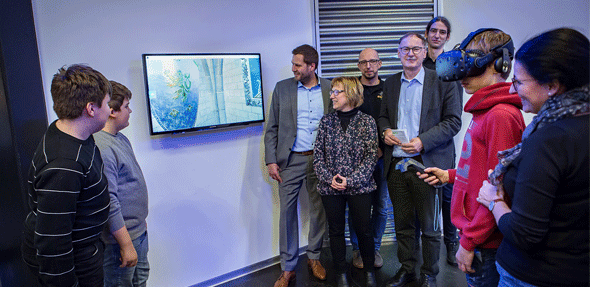 Dustin hat kein Gesicht mehr. Hände und Arme sind vorhanden. Aber ansonsten besteht der Oberkörper des Teenagers an diesem Nachmittag im Nibelungenmuseum aus einem roten Kapuzenpulli, ein paar Haaren – und einer übergroßen Brille. Das schwarze Monstrum verdeckt beinahe vollständig das Gesicht des 14 Jahre alten Schülers.
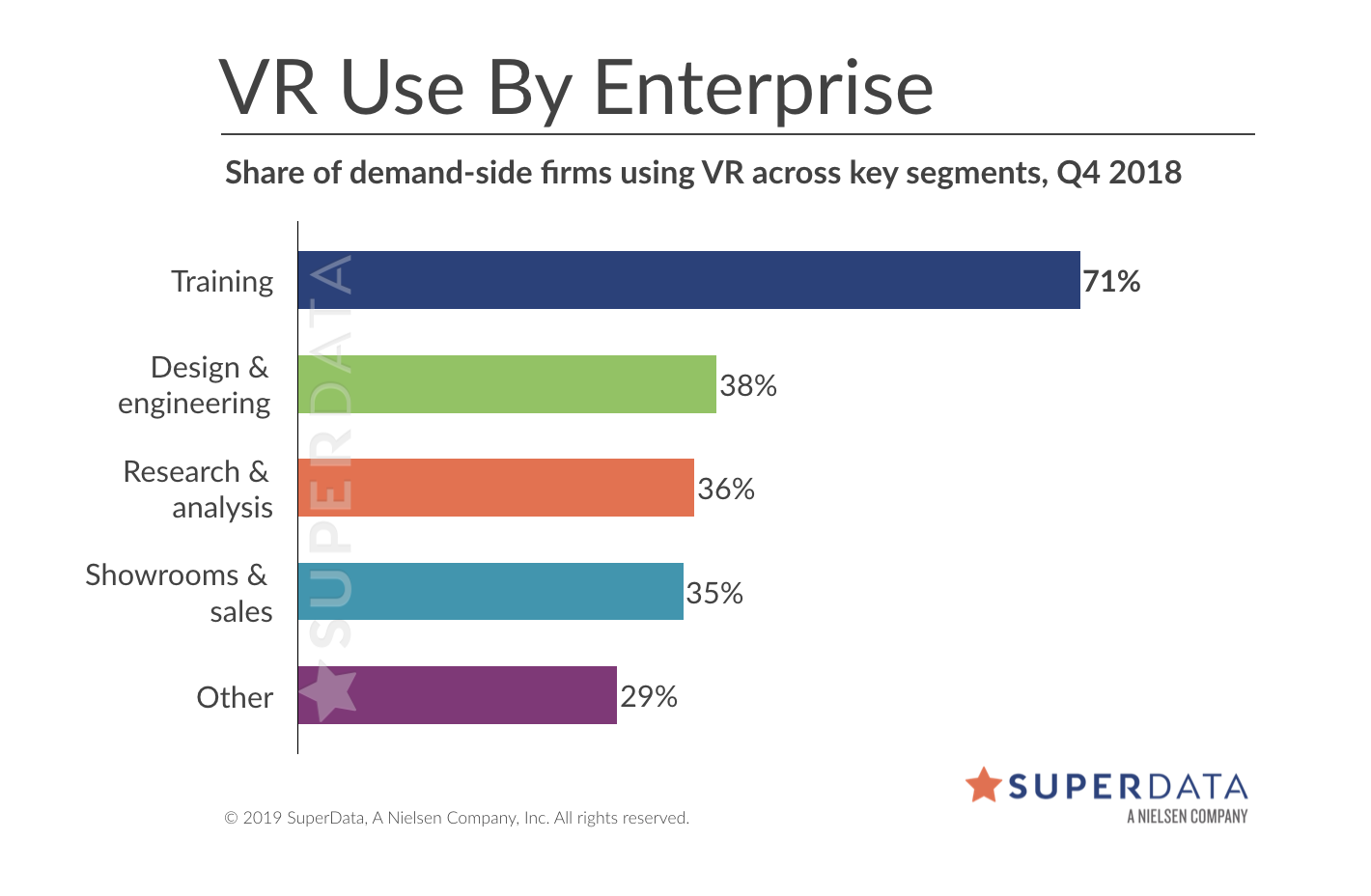 XR training is based on training simulations that involves virtual, mixed and augmented reality headsets, as well as mobile augmented reality applications. Trainees can learn and practice their new skills in an immersive environment without risking injury or having to temporarily relocate. For example, American Airlines uses VR to help new crew members familiarize themselves with safety procedures before their first day on the job.
 Besides VR training, demands for augmented reality and mixed reality are also rising among companies. In 2019, enterprises will become the biggest client of AR and MR hardware makers, accounting for 85% of AR/MR headsets sold in 2019 and will continue to represent the majority of demand through 2022.