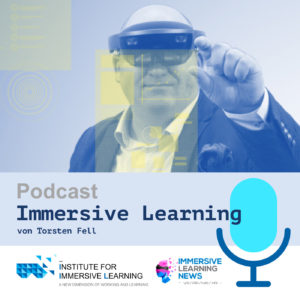
Azure and HoloLens combine for a hint at the future
Microsoft has created a hologram that will transform someone into a digital speaker of another language. The software giant unveiled the technology during a keynote at the Microsoft Inspire partner conference this morning in Las Vegas. Microsoft recently scanned Julia White, a company executive for Azure, at a Mixed Reality capture studio to transform her into an exact hologram replica.
The digital version appeared onstage to translate the keynote into Japanese. Microsoft has used its Azure AI technologies and neural text-to-speech to make this possible. It works by taking recordings of White’s voice, in order to create a personalized voice signature, to make it sound like she’s speaking Japanese.
Microsoft has shown off holograms of people before, but the translation aspect is a step beyond what has been possible with HoloLens. This looks like it’s just a demonstration for now, and you’d need access to a Mixed Reality capture studio to even start to take advantage of this. Microsoft’s studios are equipped with lighting rigs and high-resolution cameras to capture a fully accurate digital hologram of someone, which isn’t something that can be done easily at home with a smartphone just yet.
Still, Microsoft’s demonstration is certainly impressive and it speaks to the company’s ambitions with Azure, HoloLens, and beyond. The HoloLens 2 might be targeted at businesses for now, but Microsoft is attempting to build software and services that will scale to wherever augmented reality might end up heading.
Quelle:
https://www-theverge-com.cdn.ampproject.org/c/s/www.theverge.com/platform/amp/2019/7/17/20697976/microsoft-hololens-hologram-keynote-japanese-translation-microsoft-inspire






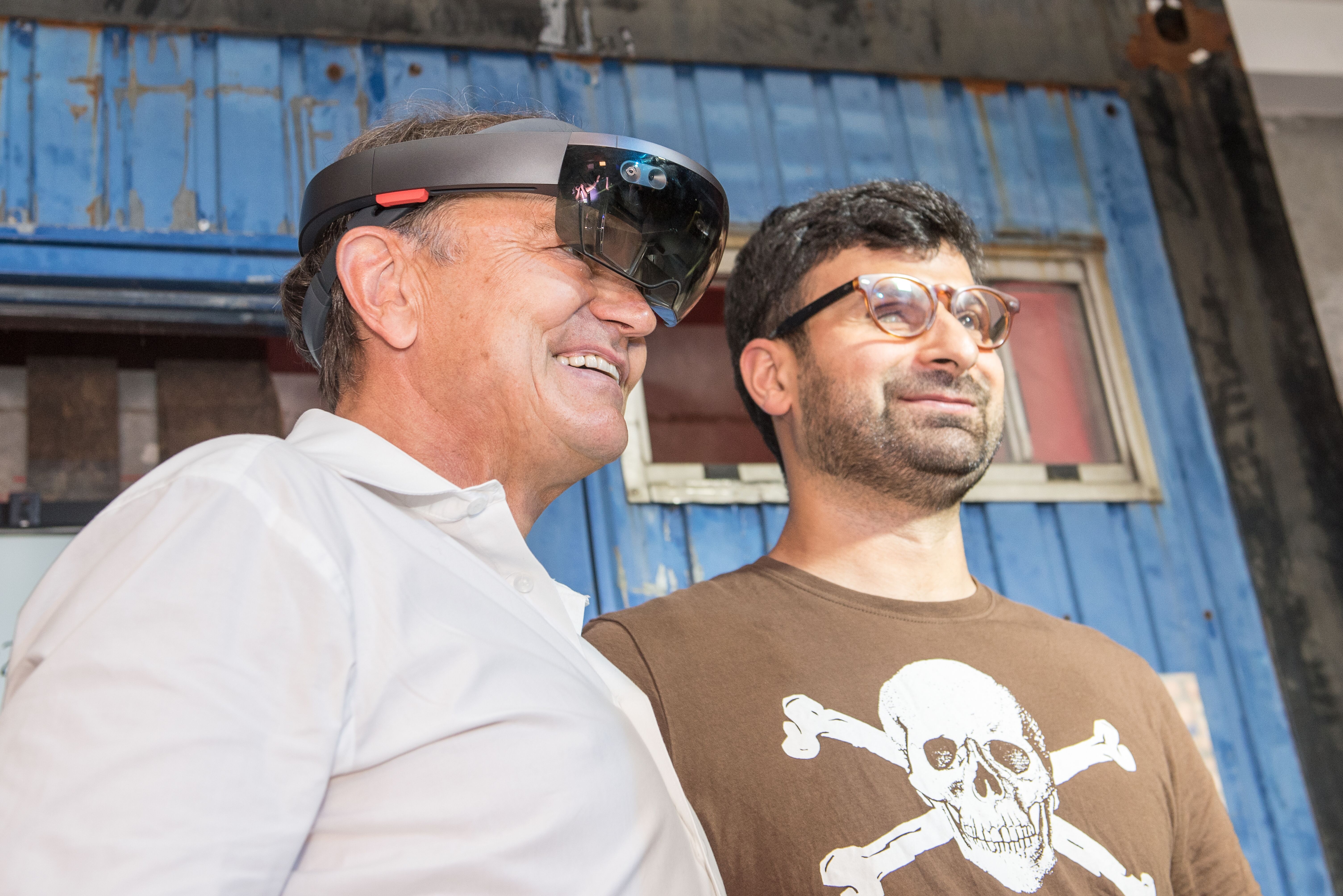 Die HoloLens von Microsoft kann nicht nur reale Räume mit virtuellen Objekten erweitern, sondern die Technologie kann auch eingesetzt werden, um Menschen eine Orientierung zu geben, welche unter einer Sehbehinderung leiden. Beim Wegeleitsystem wird dem Nutzer oder der Nutzerin durch dreidimensionalen Sound ein sicherer Weg durch die Ausstellung ermöglicht, ohne das zusätzliche Hilfsmittel nötig sind. Dazu werden zuvor die Räume des Museums gescannt und anschließend kann der Nutzer sich auf die Suche nach spannenden Inhalten begeben. Da jedoch viele Bilder und weitere Inhalte für Menschen mit Sehbehinderung nicht erfassbar sind, können an unterschiedlichen Punkten Beschreibungen der Inhalte abgerufen werden, welche die HoloLens akustisch ausgibt. Als Sprecher für die Inhalte konnte das Team Ex-Stadionsprecher Rainer Wulff gewinnen.